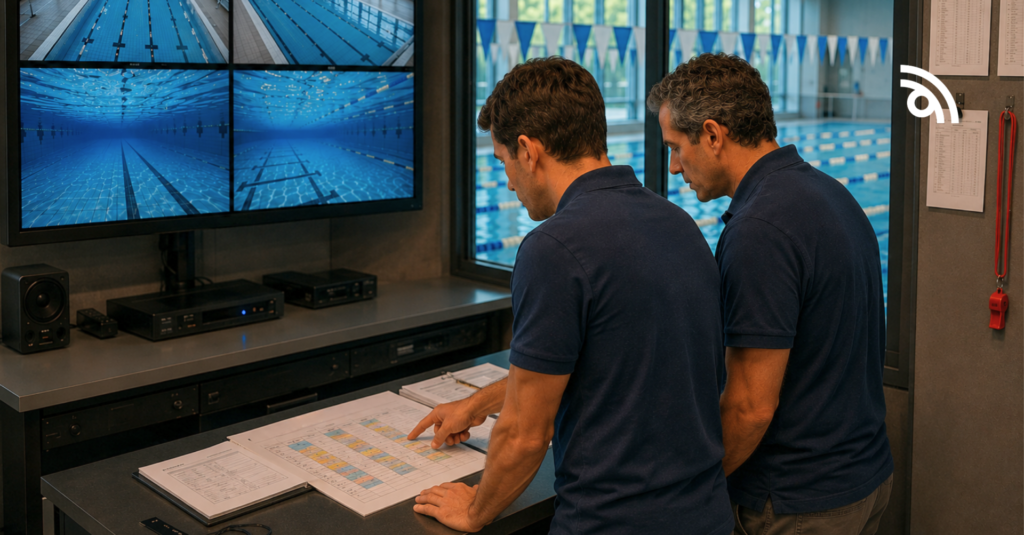
The idea of “predictive analytics” may sound abstract, but in aquatics it simply means using pool data to prepare, not just report. If a manager can identify patterns, such as which days are busiest, which areas see the most incidents, or which age groups use the pool at different times, staffing and supervision can be adjusted before an incident occurs. In this context, prediction is really about preparation.
Consider real data from Australia: one industry report found that school swim carnivals triple the risk of rescues. In other words, lifeguards were three times more likely to pull someone out of the water during a carnival than on a normal swim session. That’s exactly the kind of pattern that useful analytics can uncover. If a pool manager knows in advance that a carnival is likely to overwhelm the usual setup, they can staff more lifeguards, tighten supervision zones, or even change pool activities accordingly.
More broadly, think about what analytics can reveal: a chart of daily attendance could show an evening spike in teenage swimmers, or a historical log could highlight that most rescues happen in lane 1. Armed with those insights, a manager might reassign lifeguards, adjust lane allocations, or place extra signage where it’s needed most. For example, they could revisit supervision plans by moving guards toward a blind spot identified by data, or change staffing positions to cover a busy area.
It’s crucial to stress that data alone doesn’t improve safety, action does. Simply counting swimmers or logging past incidents is pointless unless it changes behavior. The data must drive decisions. Under good practice, predictive intelligence belongs in a facility’s risk-management framework. Analytics should inform a facility-specific duty of care, but not replace the basics of supervision. In other words, knowing your crowd’s makeup or flow only matters if you then, say, adjust how and where you monitor them.
This matters because public pools are more than businesses: they are valuable community infrastructure. Australian research finds that aquatic facilities deliver immense social, health and economic value. For example, one report estimated that Australian pools generate about A$9.1 billion per year in combined social and health benefits. Nearly 90% of Australians live within a 20-minute drive of a public pool. By using data wisely, operators can enhance these benefits: safer access, better programs, and higher public confidence in their pools. Each prevented incident means a life saved and a community reassured.
In practice, technology supports all of this. Modern safety systems, like AngelEye, not only detect emergencies but also log useful metrics: swimmer counts, occupancy heatmaps, age-group estimates, etc. A software dashboard might show peak crowded hours or flag repeated entries by non-swimmers. When managers review these analytics, they can make informed changes. For example:
- Staffing: Schedule more lifeguards during identified peak times or events.
- Session controls: Limit entrants or enforce stricter rules when data shows a session is high-risk.
- Facility layout: Move lane ropes or equipment to better distribute swimmers if certain areas get too congested.
- Education and signage: Focus water-safety messaging on the most at-risk groups or times revealed by the data.
By turning raw numbers into operational intelligence, pools can shift from reacting to drowning incidents to proactively reducing them. Pool technology doesn’t replace a vigilant team, but the right data can give that team better tools to keep everyone safe. Ultimately, analytics should empower action: when managers see patterns clearly, they can steer resources where they do the most good and keep the water safer for all.